The Challenge of Distributed Power Delivery
Modern electronic devices are becoming smaller, faster, and increasingly sensitive to supply conditions. This is especially true in low-voltage, high-current systems, where even minor variations in supply voltage can cause unpredictable behavior or outright failure.
Stable power delivery has always been critical. But today, it's increasingly common for power supplies to be located far from the load—mounted on separate boards, routed across long traces, or connected through multiple connector transitions. This physical separation introduces resistance, and with it, voltage drop. The voltage measured at the source isn't what the load actually receives.
Why Manual Voltage Compensation Falls Short
The most typical solution is to manually overcompensate the supply—calibrating for voltage loss by increasing the output. While this fix is easy to deploy, it is highly prone to errors, cannot respond to dynamic load changes, and risks over-voltage when conditions shift.
Remote sensing addresses this challenge directly.
What Is Remote Sensing?
Remote sensing is a feedback technique in power supplies that monitors voltage directly at the load terminals, allowing automatic compensation for losses across cables, connectors, and PCB traces.
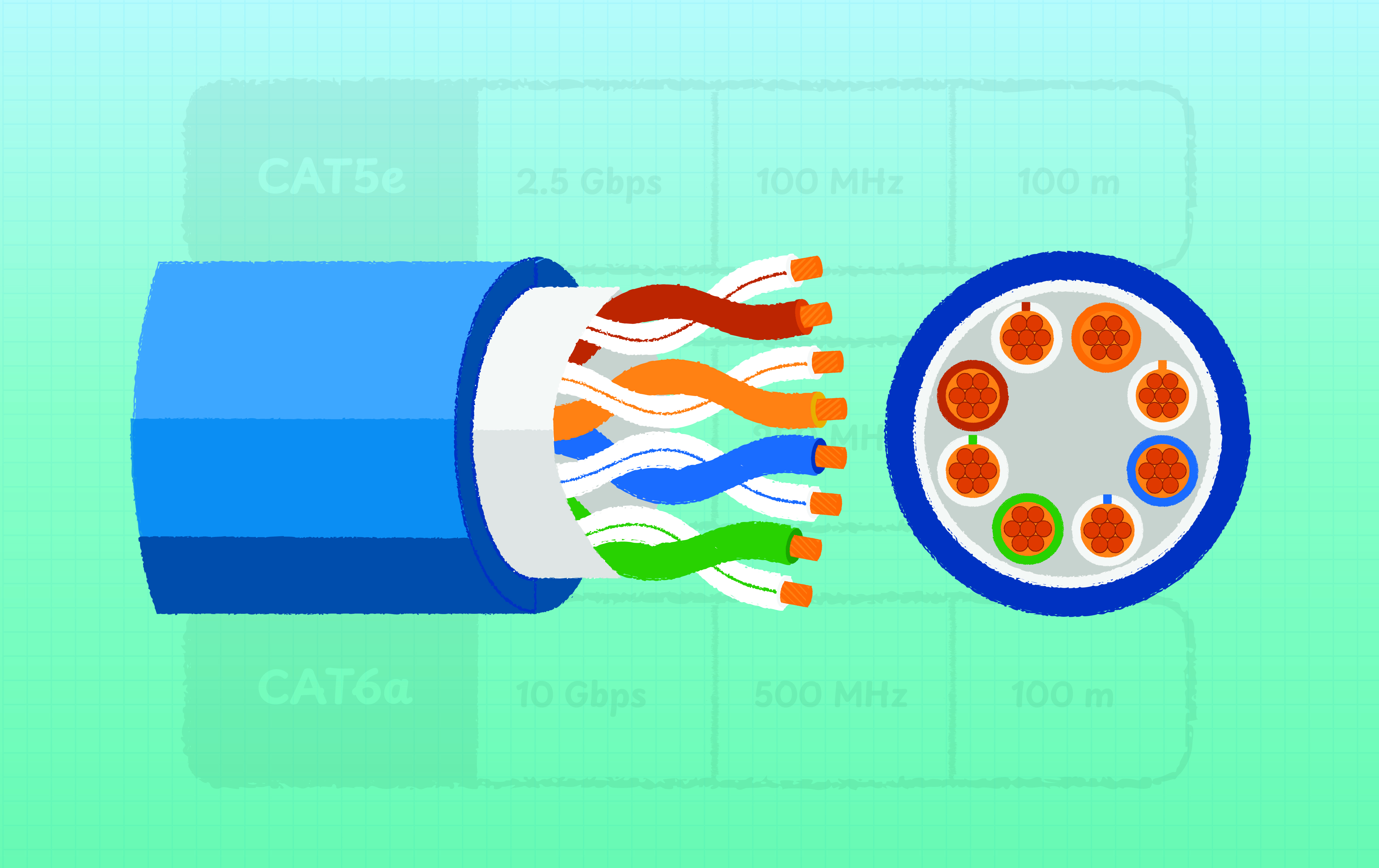
To achieve this, a remote sensing power supply uses a separate pair of sense lines wired directly to the target. Because these wires carry negligible current (and are typically twisted pairs), they don't suffer from the same voltage drop or noise issues that power lines face.

Since the voltage at the load is known, the supply can automatically adjust its output to compensate for any losses across cables, connectors, and PCB traces. The result is precise load voltage, even across high-resistance paths or under dynamic load conditions.
How Does Remote Sensing Work?
Remote sensing relies on a dedicated electrical connection between the power supply and the target load, typically a twisted differential pair. These low-current sense lines tap directly into the load terminals, allowing the supply to measure the actual voltage the device receives. It's similar to a four-wire Kelvin connection, isolating measurement from the voltage drop across conductors.
By comparing the sensed load voltage to its own output terminals, and factoring in current draw, the power supply determines how much voltage is lost across parasitic resistances. It then adjusts its output to compensate, ensuring the load sees exactly the intended voltage.
Differential Sensing and Feedback Loop Integration
The differential sense pair provides robust noise immunity, making it the preferred method in noisy or high-frequency environments. Other sensing approaches exist, but differential sensing remains the most accurate and reliable.
In AC/DC systems, remote sensing is applied to the DC output stage. Sense lines from the load return to the regulation circuit, closing the feedback loop. For DC/DC converters, the lines connect back to the controller managing output voltage. In both cases, the sensed voltage offset drives the regulation stage, pushing up the output until the voltage at the load matches the set-point.
Why Remote Sensing Matters
Real-Time Compensation
Unlike manual voltage drop compensation, remote sensing responds in real time, correcting for losses automatically. Shifts in demand, temperature, cable resistance, or even nearby EMI sources are all accounted for without user intervention. This dynamic adjustment is critical in systems with switching components, including RF amplifiers, DC-DC converters, and high-speed logic, where tight voltage tolerances are non-negotiable.

Efficiency Gains
Remote sensing offers measurable efficiency gains, particularly in constant-power loads like motors and LEDs. When voltage drops across power lines, these devices draw more current to maintain output. This increased current generates more heat (P=I²R), wasting energy. By maintaining correct voltage at the load, remote sensing minimizes current flow through the power lines, reducing heating losses.
Safety and Reliability
Remote sensing also enhances safety. Any system layout changes, cables being swapped, filters added, or routing modified, are automatically accounted for, protecting sensitive devices. Fixed output voltage compensation would require manual adjustment, which can easily be overlooked.
Over time, this translates to improved reliability. With stable voltage delivery, systems run cooler, components stay within spec, and the entire power path operates as designed, regardless of changing conditions.
Remote Sensing Applications by Industry
Remote sensing technology plays a critical role in applications where reliability, precision, and safety cannot be compromised. From factory floors to hospital operating rooms, this approach to voltage regulation addresses the fundamental challenge of delivering stable power across varying cable lengths and dynamic load conditions.
Industrial
Manufacturing environments present unique power delivery challenges. Constant loads such as motors, high-brightness LEDs, and automated machinery require stable voltage at the point of use—not just at the power supply output. When voltage drops occur along distribution cables, equipment compensates by drawing more current. This increased current generates excess heat, wastes energy, and accelerates component wear. Remote sensing solves this problem by regulating voltage precisely where it matters: at the load itself. The result is reduced thermal stress throughout the system, lower energy costs, and extended equipment lifespan.
Medical
Few industries demand tighter electrical tolerances than healthcare. Motorized surgical tools, diagnostic imaging systems, and patient monitoring equipment all depend on consistent power to function accurately and safely. Even minor voltage fluctuations can compromise diagnostic precision or introduce operational variability during critical procedures. By compensating for cable resistance and load variations in real time, remote sensing ensures medical devices operate exactly as designed. This consistency supports both diagnostic accuracy and patient safety, regardless of installation constraints or changing power demands.
Data Centers
Power efficiency directly impacts the bottom line in data center operations. These facilities route electricity through extensive distribution networks to reach thousands of servers, switches, and storage systems. Without active compensation, voltage drops across these long conductor paths force equipment to draw additional current—multiplying energy waste and heat generation at scale. Remote sensing maintains stable input voltages across all compute nodes, reducing overall power consumption and thermal load. This efficiency gain translates to lower cooling requirements, decreased failure rates, and meaningful operational cost savings.
Telecommunications
Telecom infrastructure depends on clean, stable power to maintain signal integrity. RF amplifiers, base stations, and high-frequency switching systems are particularly sensitive to supply voltage variations. Instability at the power input introduces harmonic distortion, increases electromagnetic interference, and can ultimately cause service interruptions. Remote sensing addresses these concerns by holding voltage steady at the amplifier input, minimizing EMI and supporting the stringent uptime requirements that modern communication networks demand.
Best Practices for Remote Sensing Implementation
To realize the full benefits of remote sensing, certain design rules must be followed. Otherwise, the advantages of sensing can be undermined by poor implementation.
- Twist the sense wire pair.
If using differential sensing, always twist the sense wires. A twisted differential pair helps cancel out common-mode noise while keeping the lines electrically balanced, especially important in noisy environments or near switching circuits. - Select quality connectors.
Choose low-resistance connectors and ensure solid contact at the load. Poor-quality connectors can introduce unpredictable voltage drops that defeat the entire purpose of sensing. - Address safety considerations.
While sense lines carry little current, they can still pose an electrical hazard, especially on systems running 24V or higher. Even low-voltage lines can short under the right conditions, creating heat and potential fire risk. Proper insulation, routing, and current limiting are all necessary. - Mitigate EMI exposure.
Treat sense lines like sensitive signal paths. Keep them away from high-current traces, noisy power rails, and switching nodes. Shielding or isolated routing can further reduce EMI pickup, even with differential pairs. - Know when remote sensing isn't necessary.
For short, low-resistance connections where voltage drop is negligible (typically under a few millivolts), remote sensing adds unnecessary complexity. Evaluate whether the voltage drop across your power path is significant enough to warrant sensing, generally when it exceeds 1-2% of your target voltage.
Why Remote Sensing Has Become Essential
As electronic systems push toward lower voltages, higher currents, and tighter tolerances, the gap between power supply output and actual load voltage becomes increasingly consequential. Remote sensing bridges that gap by closing the feedback loop at the load terminals, delivering real-time compensation that static calibration simply cannot match. The result is improved voltage accuracy, reduced energy waste from constant-power loads, and enhanced reliability as components operate within specification. For engineers designing telecommunications infrastructure, data center power distribution, medical devices, or industrial automation systems, remote sensing has evolved from a specialized feature to a foundational requirement for robust power delivery.